

white nights dostoevsky pdf
White Nights by Dostoevsky: A Comprehensive Guide (PDF Focus)
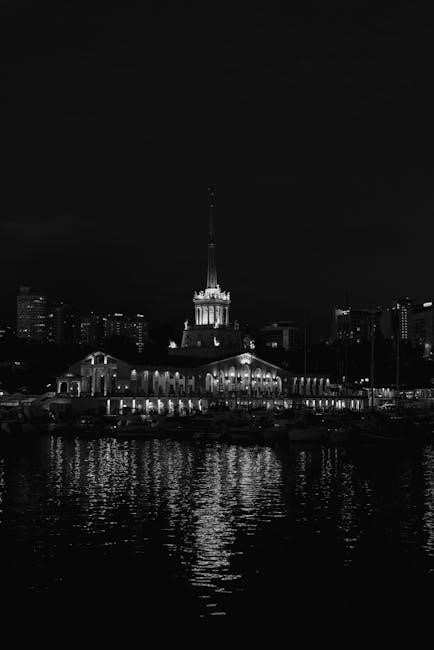
Fyodor Dostoevsky’s 1848 novella, “White Nights,” continues to inspire artistic adaptations, evidenced by filmmakers like Visconti and Jung Sung-il.
This guide explores accessing the work via PDF,
analyzing translations, and understanding its enduring appeal.
Historical Context: St. Petersburg in the 1840s
St. Petersburg in the 1840s, the setting for Dostoevsky’s “White Nights,” was a city undergoing significant transformation and grappling with profound social contradictions. Following the defeat of Napoleon in 1812, Russia experienced a period of increased Westernization under Tsar Nicholas I, a reign characterized by strict autocracy and censorship. This era witnessed a surge in intellectual ferment, particularly among the burgeoning intelligentsia, who debated Western philosophical ideas like socialism and utopianism.
The city itself was a deliberate creation of Peter the Great, designed as a “window to Europe,” and rapidly became a center of administration, commerce, and culture. However, this grandeur masked deep-seated social inequalities. A vast gulf separated the aristocratic elite from the impoverished masses, including a growing number of government clerks and laborers. This social stratification fueled a sense of alienation and melancholy, themes powerfully reflected in Dostoevsky’s work.
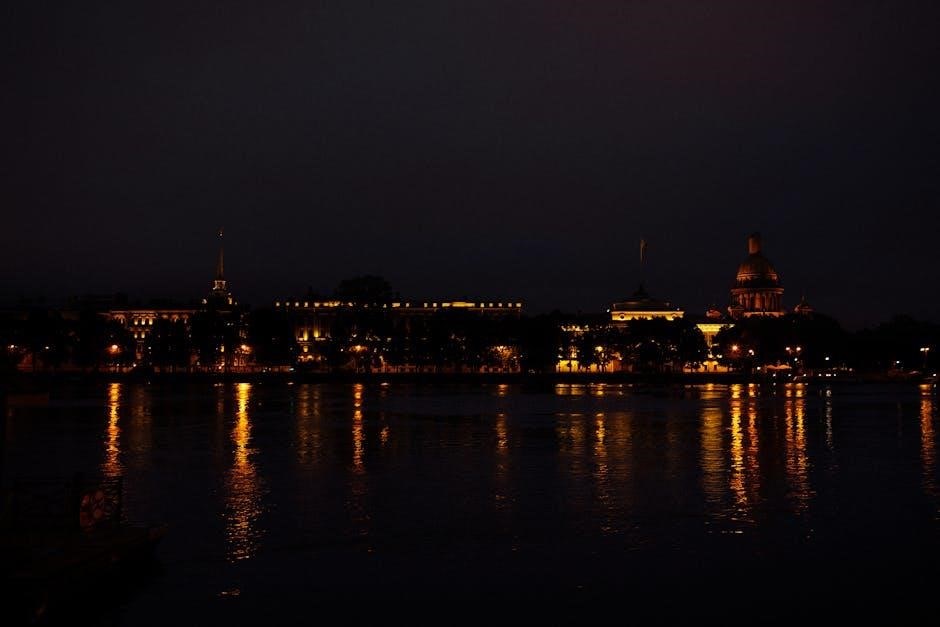
The “White Nights” phenomenon – the period in late May and early July when the sun barely sets – held a particular resonance for the city’s inhabitants. These extended daylight hours created a dreamlike atmosphere, fostering introspection and romantic longing. For the lonely and marginalized, like the narrator in the story, the White Nights offered a temporary reprieve from the darkness of everyday life, a fleeting moment of illusory connection. Understanding this historical and atmospheric backdrop is crucial for appreciating the novella’s emotional depth and thematic concerns. The availability of PDF versions allows modern readers to immerse themselves in this historical context.
The Romanticism of Dostoevsky’s Early Work
“White Nights,” penned in 1848, firmly positions itself within the tradition of Romanticism, though already hinting at the psychological complexities that would define Dostoevsky’s later, more mature works. Early Romanticism, prevalent in the first half of the 19th century, emphasized emotion, individualism, and the sublime power of nature. Dostoevsky, in his initial literary explorations, embraced these tenets, focusing on the inner lives of his characters and their passionate, often unfulfilled, desires.
The novella’s sentimental tone, its focus on idealized love, and its dreamlike atmosphere are all hallmarks of Romantic sensibility. The narrator’s intense, almost obsessive, infatuation with Nastenka exemplifies the Romantic hero’s tendency towards heightened emotional states. The city of St. Petersburg, bathed in the ethereal glow of the White Nights, serves as a backdrop for these emotional dramas, mirroring the characters’ internal turmoil.
However, Dostoevsky’s Romanticism is not simply a naive embrace of idealized beauty. Even in “White Nights,” there are undercurrents of melancholy and alienation, foreshadowing his later exploration of existential themes. The fleeting nature of happiness, the pain of unrequited love, and the isolation of the individual are all present, subtly complicating the Romantic framework. Accessing the text through a PDF allows for close reading, revealing these nuances and the seeds of Dostoevsky’s future stylistic evolution.
Plot Summary: A Four-Night Tale
“White Nights” unfolds over four transformative nights in St. Petersburg, during the brief period of perpetual daylight known as the White Nights. The story is narrated by a solitary, unnamed dreamer, a man accustomed to finding solace in his own imagination. He encounters Nastenka, a young woman mourning the loss of her fiancé, who left for the military. Drawn to her vulnerability, the dreamer offers companionship, and a unique bond begins to form.

Over the course of these four nights, the dreamer and Nastenka share their life stories, revealing their deepest hopes and fears. He recounts his own history of loneliness and his tendency to create elaborate fantasies. She details her passionate, yet ultimately doomed, romance. Their conversations are filled with a poignant mix of joy and sorrow, hope and despair.
As their connection deepens, the dreamer dares to hope for a future with Nastenka. However, his hopes are dashed when her fiancé unexpectedly returns to St. Petersburg. Nastenka, torn between her newfound affection for the dreamer and her prior commitment, ultimately chooses to reunite with her fiancé. The story concludes with the dreamer left to return to his solitary existence, though forever changed by his brief encounter with love and connection. A PDF version allows readers to revisit these pivotal nights and analyze the emotional arc of the narrative.
Major Characters: The Dreamer and Nastenka
The novella centers around two compelling characters: the unnamed Dreamer and Nastenka. The Dreamer, a sensitive and introspective man, embodies the Romantic ideal of the isolated individual. He’s a habitual fantasizer, finding more comfort in his imagined worlds than in reality. His loneliness is palpable, and he actively seeks connection, yet struggles with social interaction. A PDF copy allows close examination of his internal monologues, revealing his complex emotional landscape.
Nastenka, in contrast, is a more outwardly emotional character. She is grieving the impending departure – and potential loss – of her fiancé. Her vulnerability and desperation for companionship draw her to the Dreamer. She’s impulsive and prone to dramatic declarations, revealing a passionate nature beneath her sadness. She represents a fleeting moment of possibility for the Dreamer, a chance to escape his isolation.
Their dynamic is crucial to the story’s emotional core. The Dreamer offers Nastenka a sympathetic ear and a safe space to express her feelings, while she awakens him from his self-imposed solitude. However, their connection is ultimately unsustainable, highlighting the tragic nature of unfulfilled desires. Analyzing their interactions within a PDF format provides a focused study of their contrasting personalities and the delicate balance of their relationship.
Themes Explored: Loneliness and Isolation
Loneliness and isolation are central themes in “White Nights,” profoundly explored through the Dreamer’s character. He exists on the periphery of society, preferring the company of his own thoughts to genuine human connection. This self-imposed exile stems from a deep-seated insecurity and a fear of rejection. A PDF version of the novella allows for repeated readings, emphasizing the recurring motifs of solitude and the Dreamer’s yearning for companionship.
Dostoevsky masterfully portrays the psychological effects of isolation, showcasing how it can lead to fantasy and detachment from reality. The Dreamer’s elaborate daydreams serve as a coping mechanism, a way to escape the pain of his loneliness. Nastenka, though initially seeking connection, also experiences a form of isolation due to her impending loss and emotional turmoil.
The story suggests that even amidst the bustling city of St. Petersburg, individuals can feel profoundly alone. The fleeting encounter with Nastenka offers a temporary reprieve from this isolation, but ultimately underscores its pervasive nature. Studying the text via PDF facilitates a detailed examination of Dostoevsky’s nuanced portrayal of these themes, revealing the universal human need for belonging and the devastating consequences of its absence.
Symbolism of the White Nights Phenomenon
The “White Nights” themselves, a uniquely St. Petersburg experience of nearly continuous daylight during the summer, are richly symbolic within Dostoevsky’s novella. They represent a liminal space, a period of suspension between darkness and full light, mirroring the Dreamer’s own state of emotional uncertainty and unrealized hopes. Accessing the text through a PDF allows for focused annotation of these symbolic occurrences.
The perpetual daylight disrupts the natural order, creating an atmosphere of unreality and heightened emotional intensity. This mirrors the Dreamer’s fantastical inner world and his tendency to romanticize his experiences. The brightness can also be interpreted as a symbol of hope, albeit a fragile and fleeting one, as embodied by his brief connection with Nastenka.
Conversely, the lack of darkness can also signify a lack of privacy and a sense of exposure, reflecting the Dreamer’s vulnerability and his inability to conceal his emotions. The PDF format enables close reading of passages describing the White Nights, revealing how Dostoevsky uses this natural phenomenon to amplify the novella’s themes of longing, illusion, and the ephemeral nature of happiness. It’s a backdrop for a transient, almost dreamlike romance.
The Significance of St. Petersburg as a Setting
St. Petersburg is far more than just a backdrop in Dostoevsky’s “White Nights”; it’s an integral character, deeply influencing the novella’s atmosphere and themes. The city, meticulously described even within a digital PDF version, embodies a sense of alienation and romantic melancholy, mirroring the Dreamer’s internal state. Its architectural grandeur contrasts sharply with the characters’ emotional poverty.
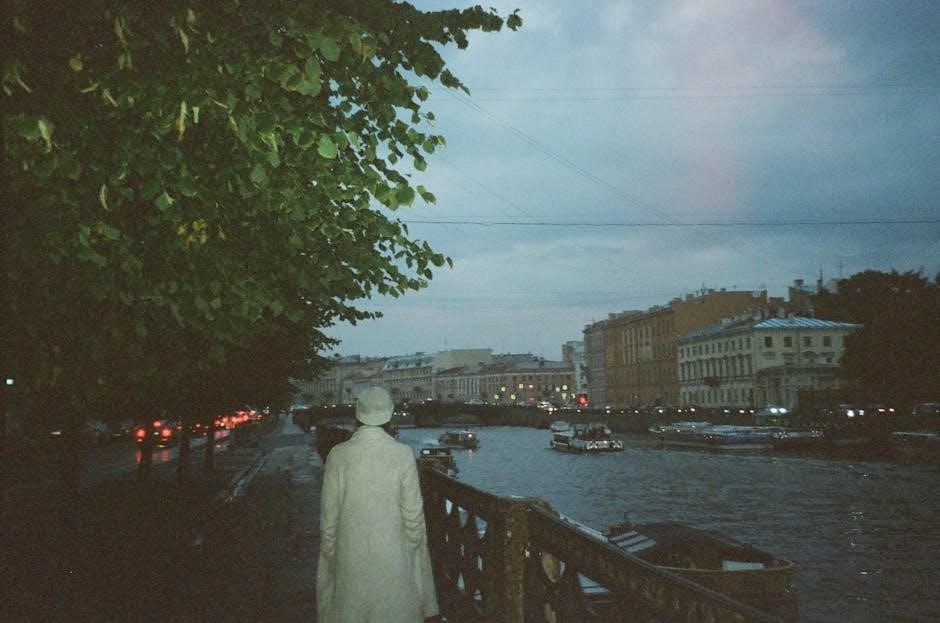
Dostoevsky portrays St. Petersburg as a city of contrasts – a place of both beauty and squalor, of bustling activity and profound loneliness. The canals, bridges, and meticulously planned streets contribute to a feeling of artificiality, reflecting the Dreamer’s own constructed reality and his detachment from genuine human connection. Studying the setting via a PDF allows for repeated referencing of descriptive passages.
The city’s unique atmosphere, particularly during the White Nights, amplifies the novella’s themes of illusion and unfulfilled desire. St. Petersburg, in Dostoevsky’s hands, becomes a symbol of the modern urban experience – a place where individuals can become lost and isolated amidst the crowds. The PDF format facilitates a focused examination of how Dostoevsky uses the city to explore the psychological landscape of his characters and the complexities of human existence.
Narrative Style: First-Person Confessional
“White Nights” is uniquely shaped by Dostoevsky’s masterful use of a first-person confessional narrative. The entire story unfolds through the Dreamer’s perspective, offering an intimate and subjective account of his fleeting encounter with Nastenka. This stylistic choice, readily apparent even when reading a PDF version, draws the reader directly into the protagonist’s emotional world, fostering a sense of empathy and understanding.
The Dreamer’s rambling, introspective monologues reveal his loneliness, his tendency towards fantasy, and his desperate yearning for connection. This confessional style isn’t simply a storytelling device; it’s a window into the character’s psyche. Accessing the text through a PDF allows for close reading and annotation of these crucial passages, highlighting the nuances of his internal struggles.
Dostoevsky employs a stream-of-consciousness technique, mirroring the Dreamer’s fragmented thoughts and emotions. The narrative isn’t driven by plot, but by the protagonist’s internal reflections. This intimate and revealing style, preserved in any digital PDF format, is central to the novella’s power and enduring appeal, offering a profound exploration of human vulnerability and the search for meaning in a seemingly indifferent world.
Critical Reception and Analysis
“White Nights,” while not as extensively analyzed as Dostoevsky’s major novels, has consistently garnered attention for its delicate portrayal of romantic longing and existential isolation. Early critics often viewed it as a charming, if somewhat sentimental, tale. However, modern analysis, easily facilitated by readily available PDF versions of the text, reveals a deeper complexity.
Scholars now recognize the novella’s exploration of themes like social alienation and the power of imagination. The Dreamer’s character is often interpreted as a precursor to Dostoevsky’s later, more psychologically complex protagonists. Accessing the text in PDF format allows researchers to easily search for recurring motifs and analyze the narrative structure.
The influence of Romanticism is frequently noted, alongside foreshadowings of Dostoevsky’s later existential concerns. Some critics argue that the story’s ending, while seemingly melancholic, offers a subtle affirmation of the Dreamer’s inner life. The accessibility of digital PDF copies has broadened the scope of critical engagement, enabling a wider range of interpretations and fostering ongoing scholarly debate regarding its artistic merit and thematic significance.
Legality and Ethics of Downloading Dostoevsky PDFs
Downloading PDFs of “White Nights” and other works by Dostoevsky raises important questions regarding copyright law and ethical considerations. As the author died in 1881, his works are generally in the public domain globally. This means that reproductions, including PDF versions, can be legally downloaded and distributed without permission – provided the specific edition itself is also in the public domain.
However, caution is advised. Many PDFs available online are derived from copyrighted translations (like those by Pevear and Volokhonsky or Garnett). Downloading these without purchasing them constitutes copyright infringement. Ethical considerations extend beyond legality; supporting authors and translators through legitimate purchases ensures continued quality work.
Reputable sources for free, legal PDFs include Project Gutenberg and Internet Archive, which offer editions confirmed to be in the public domain. Always verify the source and publication date before downloading. While convenient, unauthorized PDFs undermine the creative process and potentially support illegal distribution networks. Prioritizing legal avenues demonstrates respect for intellectual property and fosters a sustainable literary ecosystem.
Analyzing Different PDF Translations (Pevear & Volokhonsky, Garnett)
When accessing “White Nights” as a PDF, the translation significantly impacts the reading experience. Two prominent translations are those by Richard Pevear and Larissa Volokhonsky, and Constance Garnett. Garnett’s translation, while historically popular, is often criticized for its Victorian-era prose, smoothing out Dostoevsky’s stylistic quirks and potentially diminishing the emotional intensity.

Pevear and Volokhonsky aim for a more literal rendering, preserving Dostoevsky’s often-awkward phrasing and psychological depth. Their PDF versions often feel rawer and more immediate, reflecting the narrator’s fragmented mental state. However, some readers find their style less fluid and accessible.
Comparing PDF excerpts from both translations reveals key differences. Garnett tends towards elegant sentence structures, while Pevear & Volokhonsky prioritize accuracy, even at the expense of stylistic grace. The choice depends on individual preference: a smoother, more conventional read versus a closer approximation of Dostoevsky’s original voice.
Consider the nuances of character portrayal and the overall tone; A PDF allows for side-by-side comparison, enabling readers to appreciate the interpretive choices inherent in translation and select the version that best resonates with their understanding of the story.
PDF Format Considerations: Readability and Accessibility

Accessing “White Nights” as a PDF offers convenience, but format quality impacts readability. Poorly scanned PDFs can suffer from distorted text, making extended reading uncomfortable. Optical Character Recognition (OCR) technology is crucial; a well-OCR’d PDF allows for text selection, searching, and resizing without significant loss of quality.
Font choice and size are also vital. PDFs with small or unusual fonts strain the eyes. Reflowable text – the ability to adjust text to fit the screen – enhances readability on various devices. However, complex formatting, like poetry or specific layouts, may not translate well with reflow.
Accessibility is a key consideration. PDFs should be tagged correctly to be compatible with screen readers, benefiting visually impaired readers. Untagged PDFs present a barrier to access, hindering comprehension. Look for PDFs adhering to accessibility standards (WCAG).
File size impacts download speed and storage; Compressed PDFs are preferable, but excessive compression can degrade image quality. When choosing a PDF version, prioritize clarity and accessibility over minimal file size. A well-formatted, accessible PDF ensures a positive reading experience for all.
Resources for Further Study: Online Texts and Scholarly Articles

Numerous online resources enhance understanding of Dostoevsky’s “White Nights.” Project Gutenberg offers a free, downloadable PDF version, though formatting may be basic. Internet Archive provides digitized copies, including various translations and critical analyses. Be mindful of copyright restrictions when accessing older editions.

For scholarly insights, JSTOR and Google Scholar are invaluable. Search for articles focusing on Dostoevsky’s early romanticism, the symbolism of the “white nights” phenomenon, and the novella’s exploration of loneliness. Key critical perspectives often analyze the narrative’s confessional style and St. Petersburg’s influence.
Academia.edu and ResearchGate host papers by scholars, offering diverse interpretations. University library databases provide access to peer-reviewed journals and books. Explore resources dedicated to 19th-century Russian literature for contextual understanding.
Websites like LitCharts offer concise summaries and analyses, useful for quick reference. However, always supplement these with primary source readings and scholarly articles. Remember to critically evaluate online sources, verifying author credentials and publication dates. A comprehensive study requires engaging with both the text and its critical reception.